When a thunderstorm takes a piece of your roof
Charlotte isn't Oklahoma, but it gets its share of hail, straight-line wind and falling limbs. The first job after a storm is keeping water out; the second is documenting what happened.
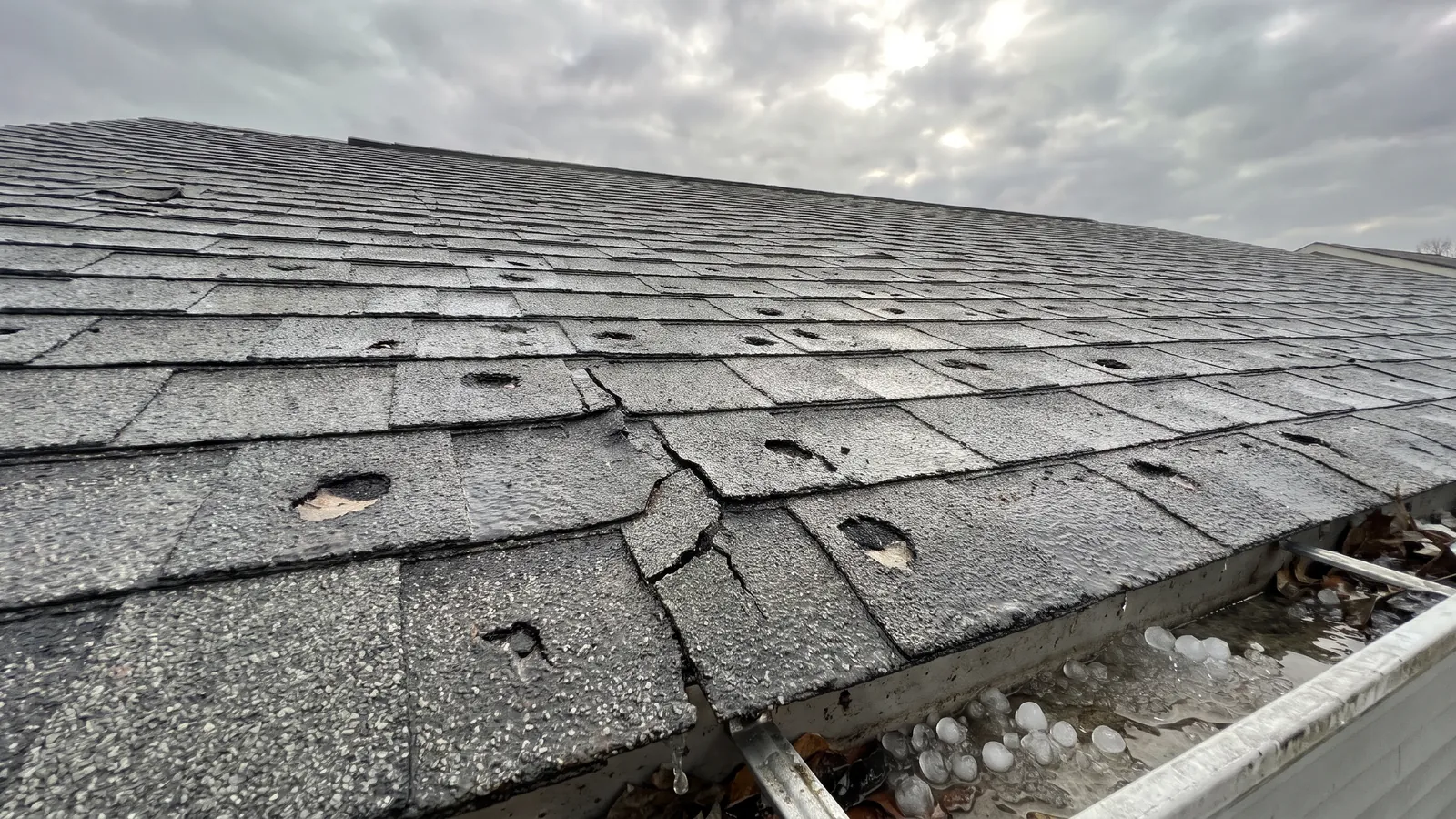
Severe thunderstorms roll across the Charlotte region most summers. On July 10, 2026, hail and 60 mph winds crossed the area and about 21,000 Duke Energy customers lost power; two days later forecasters were warning of quarter-size hail in Lancaster County to the south. In March 2026, tornado and wind reports came in from Center City itself. August and September brought more rounds. Each one leaves the same calls: shingles in the yard, a limb through the roof, dents across the gutters, and a ceiling stain that wasn't there yesterday.
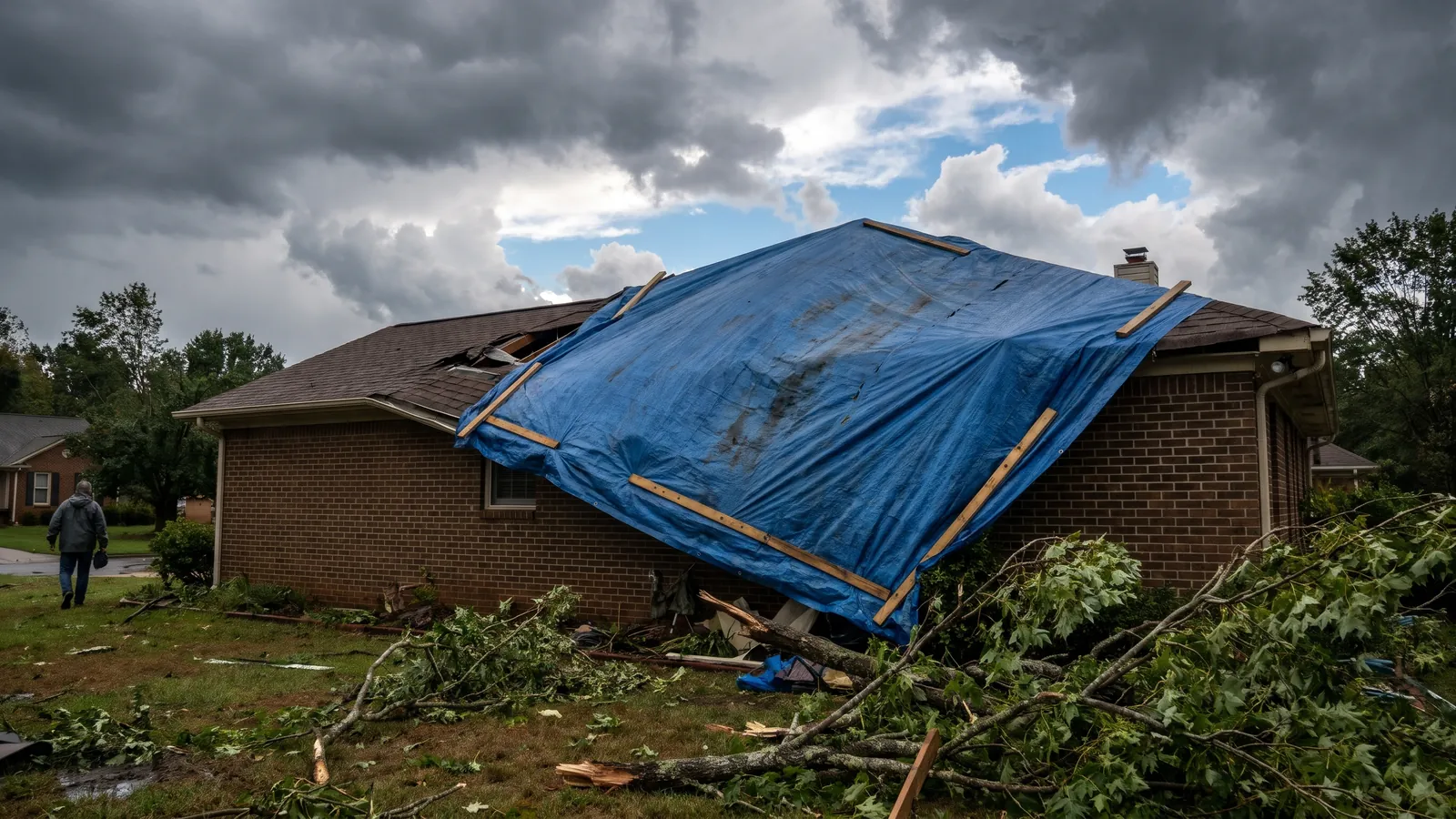
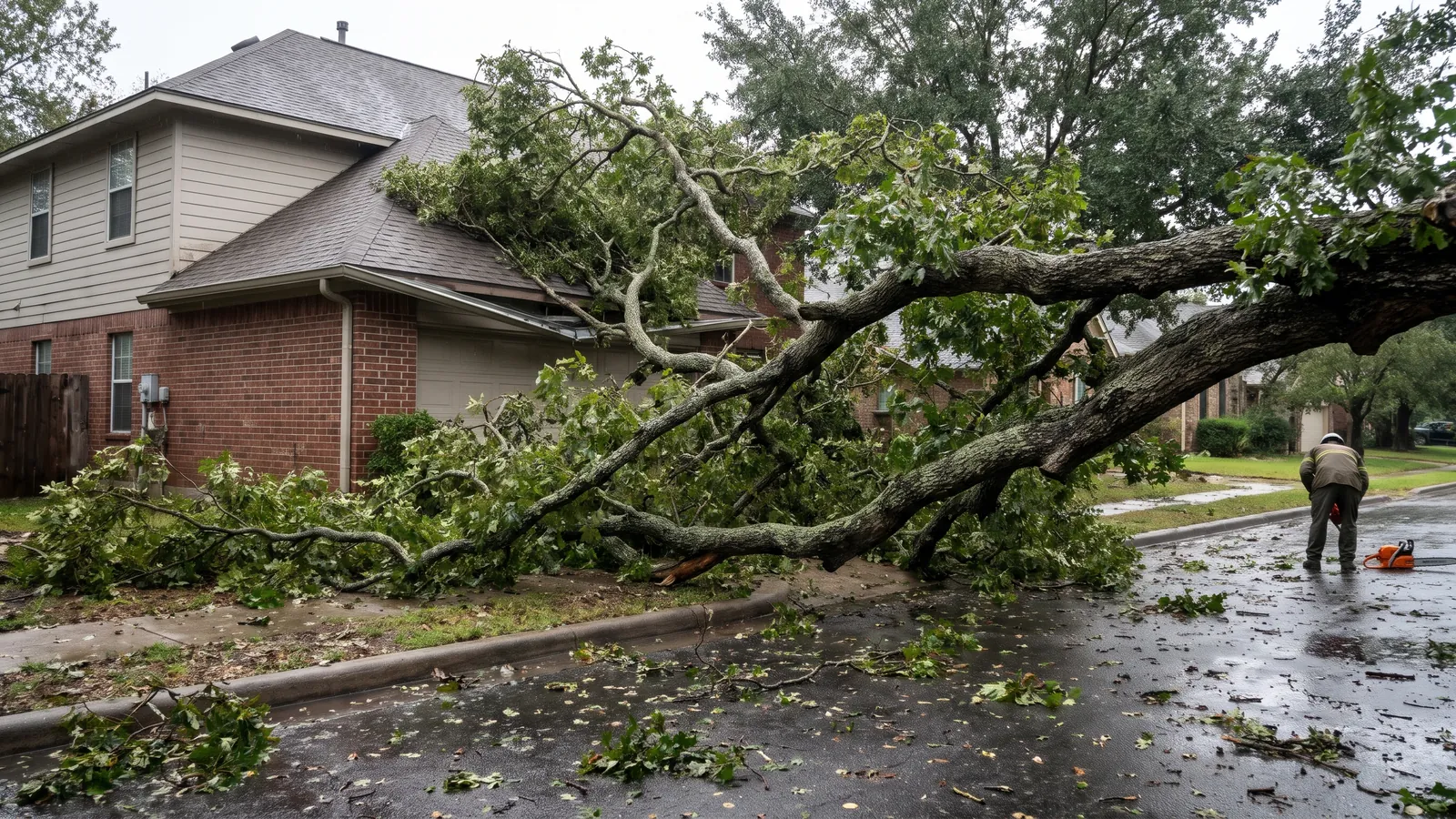
First, stop the water. If the roof is open, we put on an emergency tarp, fastened with wooden battens rather than a few nails through the shingles, so it survives the next gust and doesn't create new holes. If a tree or limb is on the roof, it has to come off before anyone walks that slope; we coordinate with a tree crew when it's a big one. Inside, move what you can away from drips and catch water in buckets. If a ceiling is bulging, keep people out of the room.
Then, document it. Hail damage on asphalt shingles shows up as round bruises, spots where granules were knocked off, and cracked or torn tabs; it's often clearer on soft metals like vents, flashing and gutters. Wind damage is creased or missing shingles, usually along ridges, rakes and edges. We photograph each slope, mark test areas, note dates, and give you a written report you can hand to your insurer.
Then, repair or replace. Some storms take a few shingles; some ruin a roof. If the damage is spread across the slopes, a replacement may be the honest answer. One thing to check early: wind and hail coverage isn't automatically part of every North Carolina homeowners policy, so read the declarations page or ask your agent before you assume the claim will be paid. Our claim guide goes step by step.
What the job includes
Emergency tarps
Tarps fastened with battens to hold through the next storm without punching new holes.
Limb coordination
Tree crews lined up for big limbs; nobody walks a slope with a tree on it.
Hail and wind inspection
Every slope checked, soft metals examined, test areas marked and photographed.
Written storm report
Dated photos and notes you can share with your insurer and adjuster.
Adjuster meeting
A roofer on site when the adjuster inspects, if you'd like one.
Repair or replace
A plain recommendation based on how much of the roof was hit.
What storm and hail damage costs in Charlotte
| Work | Typical range | What changes it |
|---|---|---|
| Emergency tarp, small to mid area | $350 – $900 | Size, height, pitch |
| Emergency tarp, large or steep | $900 – $2,000 | Access and number of tarps |
| Storm inspection with photo report | $0 – $250 | Free when we do the repair |
| Replace wind-blown shingles | $300 – $900 | Count, slope and matching |
| Limb strike repair (decking and shingles) | $1,200 – $5,000 | Rafter damage adds cost and a permit |
| Full storm replacement | See replacement | Usually through an insurance claim |
Ranges are planning numbers for the Charlotte area in 2026, not quotes. Your price comes in writing after the inspection, with materials named and the permit listed when one is required.
On the job
Storm and hail damage: common questions
What should I do right after a storm damages my roof?
Stay safe, keep people out from under sagging ceilings, catch drips, take photos from the ground, and call for a tarp. Then call your insurer. Don't climb up yourself.
How do I know if hail damaged my roof?
From the ground, look at gutters, downspouts and vent caps for dents. On the roof, hail leaves round bruises and bare spots where granules were knocked off. An inspection confirms it.
Will insurance pay for my roof after a storm?
It depends on your policy and the damage. Some North Carolina policies treat wind and hail differently, so check yours. If covered damage is found, the claim usually pays for repair or replacement less your deductible.
Can you meet the insurance adjuster?
Yes. Having the roofer there helps the adjuster see every damaged area and makes sure nothing is missed.
How long can I leave a tarp on?
A properly fastened tarp can hold for weeks, but it's a temporary fix. Plan the permanent repair as soon as the claim and the weather allow.
Do storm chasers show up after big storms here?
Out-of-town crews do follow storms. Before you sign, check that the contractor holds the North Carolina licence the job requires and has local permit history.